


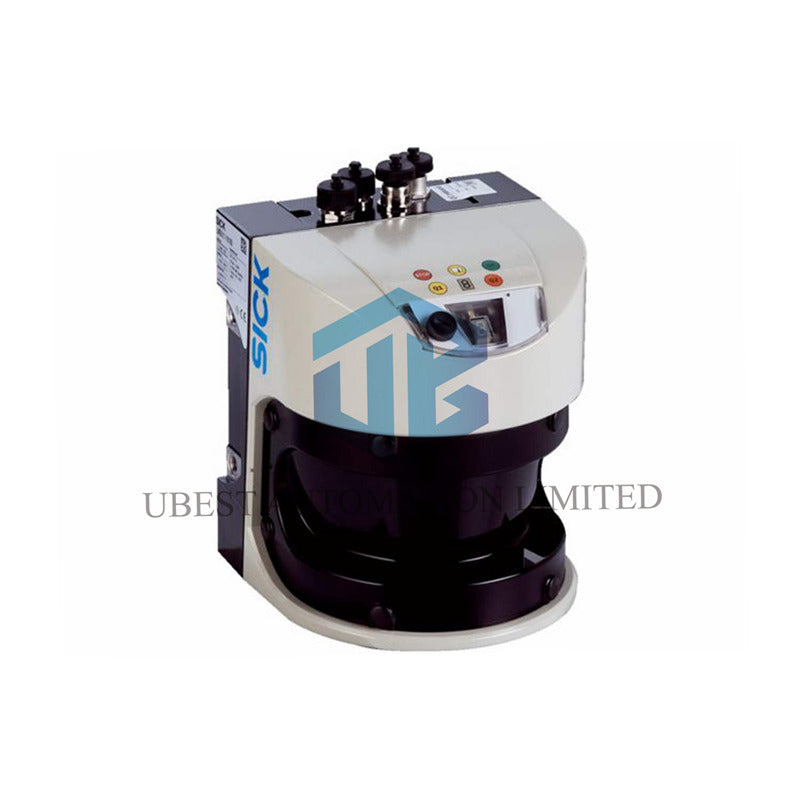
SICK LMS511-20190 Bulkscan Flow Sensor | Bulk Solids
UBEST – Trusted Global Automation Parts Supplier
We offer a wide range of in-stock industrial automation spare parts. All products come with a 12-month warranty and a 30-day refund for quality issues.
SICK LMS511-20190 | Bulkscan Bulk Solid Flow Sensor
Accurate volume flow measurement for bulk materials. The LMS511-20190 Bulkscan uses advanced laser time-of-flight technology to monitor material on conveyors. It ensures precise control in mining, agriculture, and material handling.
Complete Technical Specifications
Brand & Model: SICK LMS511-20190 (Bulkscan)
Product Type: Laser Flow Sensor for Bulk Solids
Measurement Principle: Laser Time-of-Flight (LiDAR)
Measuring Range: 0.5 m to 20 m (from sensor to material surface)
Field of View: 190° Aperture Angle
Scanning Frequency: 35, 50, or 75 Hz (Selectable)
Flow Accuracy: ±3% (at reference conditions)
Max Conveyor Speed: ≤ 30 m/s
Light Source: Infrared Laser, 905 nm, Class 1 (Eye-safe)
Interfaces: Ethernet TCP/IP (100 Mbit/s), RS-232/422, USB 2.0
I/O Count: 2 Switching Inputs + Encoder, 6 Switching Outputs
Power Supply: 19.2 - 28.8 V DC
Power Consumption: 22 W + 55 W Heating (typical)
Housing Protection: IP67
Operating Temperature: -40°C to +60°C
Ambient Light Immunity: 70,000 lx
Dimensions (L x W x H): 160 mm x 155 mm x 185 mm
Weight: 3.7 kg
Installation & Setup Guide
Mount the Bulkscan LMS511-20190 sensor above the conveyor belt, ensuring a minimum distance of 0.5m to the material surface. Connect power (24V DC nominal) and your preferred data interface (Ethernet recommended). Connect the optional encoder to the conveyor for speed input. Use configuration software to set up scan profiles and calibrate for your specific material.
Package & Warranty
Includes one SICK LMS511-20190 Bulkscan flow sensor. This product is covered by a 12-month warranty. We ensure fast delivery via FedEx, UPS, or DHL worldwide.
Frequently Asked Questions
What types of bulk material can it measure?
It is designed for free-flowing bulk solids such as coal, gravel, sand, grain, plastic pellets, and wood chips. Performance may vary with extreme material properties like very low reflectivity.
Why is an encoder input recommended?
Connecting an encoder from the conveyor drive provides precise belt speed data. This allows the sensor to calculate true volume flow (e.g., tons per hour), not just material profile height.
How does it handle dust and poor visibility?
The sensor can evaluate up to 5 echoes per laser pulse, helping to distinguish between dust clouds and the actual material surface. The integrated heating also prevents fogging on the window.
Can it output an analog signal for flow rate?
Yes, but it requires the separate BAM100 accessory module. The sensor's native outputs are digital (6 switching outputs) and digital communication via Ethernet/Serial.
What is the purpose of the configurable average filter (0-3600s)?
For very uneven material flow, you can apply a long averaging period (e.g., several minutes) to smooth the output data and get a stable average flow rate, which is useful for inventory management.
© 2025 Ubest Automation Limited. All rights reserved.
Original Source: https://www.ubestplc.com/
Contact: sales@ubestplc.com | Phone: +86 180 3000 5825