


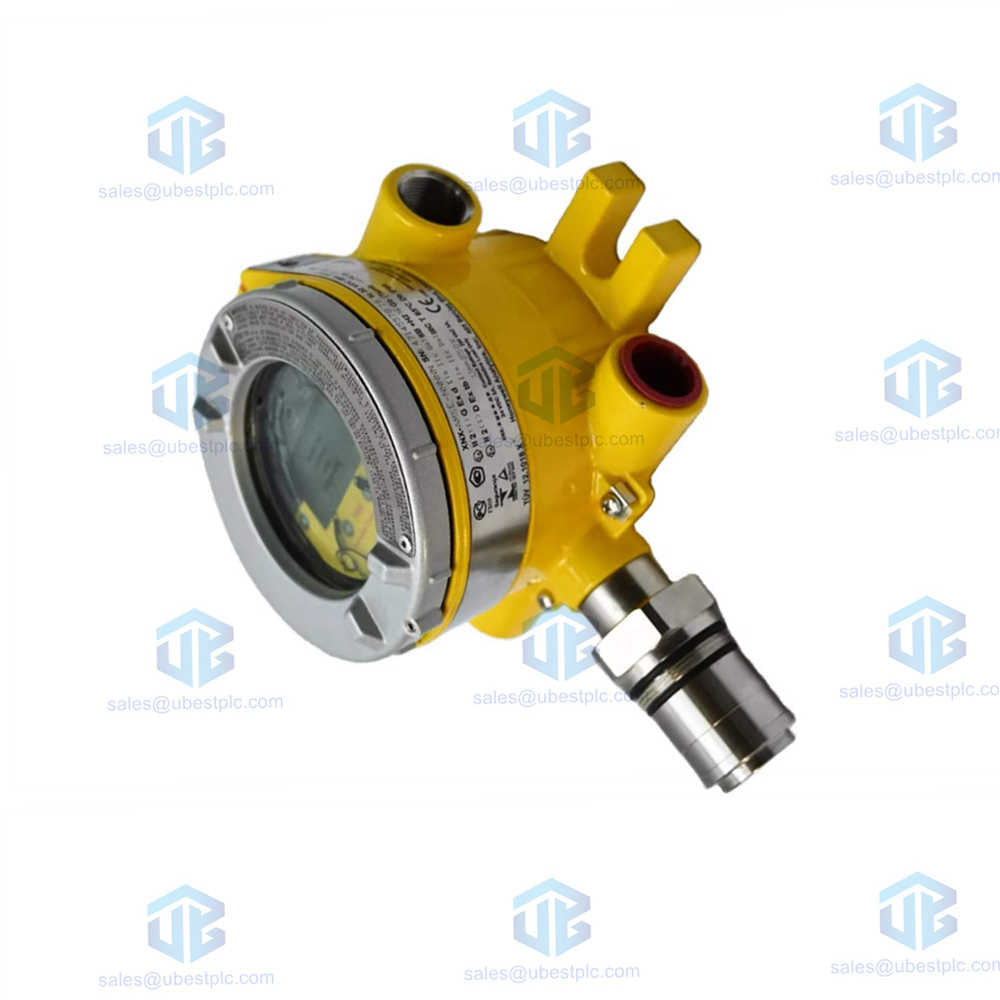
XNX-AMSE-NHNNN Honeywell XNX Transmitter ATEX SS Gas Detector
UBEST – Trusted Global Automation Parts Supplier
We offer a wide range of in-stock industrial automation spare parts. All products come with a 12-month warranty and a 30-day refund for quality issues.
Product Overview
The Honeywell XNX Universal Transmitter (Model: XNX-AMSE-NHNNN) delivers advanced industrial gas detection. Engineered for toxic and oxygen monitoring, this unit features a rugged 316 stainless steel enclosure and standard M25 conduit entries. It integrates seamlessly into plant safety networks via 4-20mA HART communications. Built for harsh operational environments, the unit carries full ATEX/IECEx explosion-proof certifications. Standard configuration supports immediate integration with electrochemical sensor cartridges.
Technical Specifications
| Brand | Honeywell Analytics |
| Model Number | XNX-AMSE-NHNNN |
| Product Series | XNX Universal Transmitter Series |
| Enclosure Material | 316 Stainless Steel (Grade S) |
| Entry Type | M25 Cable Threaded Entries |
| Approvals | ATEX / IECEx Hazardous Area Rated |
| Personality Board | Electrochemical (EC) Cartridge Interface with IS Barrier |
| Communication | 4-20mA with Local HART Protocol (EDDL Supported) |
| Target Gases | Toxic Gases and Oxygen (O2) |
| Measurement Range | Sensor Dependent (e.g., O2: 0-25% Vol; H2S: 0-100 ppm) |
| Response Time (T90) | < 15 Seconds (Typical for standard EC cartridges) |
| Sensitivity & Linearity | ±1% FS Repeatability; Linearity < ±2% FS |
| Resolution | 0.1 ppm / 0.1% Vol (Sensor specific) |
| Operating Temperature | -40°C to +65°C (-40°F to +149°F) |
| Environmental Protection | IP66 / NEMA 4X Hazardous Area Compliant |
| EMC Immunity | EN 50270 Class R FI/RFI Shielding |
System Architecture & Module Compatibility
- Electrochemical Personality Card: Incorporates intrinsic safety barriers for direct cell drive.
- Local HART Port: Provides direct device setup using standard handheld field communicators.
- Controller Integration: Connects directly to Honeywell DCS, standard PLCs, and third-party monitoring systems.
- Common Platform Advantage: Accepts toxic and oxygen toxic sensor cartridges across processing units.
Installation & Mounting Guidelines
- Mount unit securely on structural walls or rigid pipe struts using optional mounting kits.
- Ensure main M25 conduit ports face downwards to prevent water ingress into internal terminals.
- Apply approved thread sealant on external M25 conduit fittings to retain IP66 integrity.
- Connect ground earth points on external chassis to plant bonding grid before powering up.
- Verify system voltage supplies stable 16 to 32 VDC at main terminal block connectors.
Commissioning & Maintenance Features
- Non-intrusive calibration requires only a magnetic wand; enclosure remains fully sealed in hazardous zones.
- Backlit LCD screen shows gas concentration, fault codes, and diagnostic warnings clearly.
- Plugin sensor cartridges permit quick field replacement without opening main electronics pod.
- Local HART EDDL interface allows fast diagnostic interrogation and offsite parameter backups.
Compliance & Global Certifications
- ATEX Zone 1 & Zone 2 II 2 G Ex d ia [ia] IIC T4/T5 Gb certified.
- IECEx safe operational compliance across international processing facilities.
- CE Mark compliance for Electromagnetic Compatibility (EMC) standards.
- SIL2 rating capable according to IEC 61508 safety system requirements.
Diagnostic Capabilities
- Continuous monitoring checks hardware loops, cell continuity, and power rails automatically.
- HART EDDL integration provides predictive diagnostic health alerts directly to control rooms.
- Real-time fault tracking identifies cell depletion, signal drift, and internal voltage drops.
Typical Application Scenarios
- Offshore oil drilling platforms and floating production storage units (FPSO).
- Petrochemical processing facilities and crude oil refining complexes.
- Wastewater treatment facilities monitoring hydrogen sulfide concentration levels.
- Chemical storage warehouses and specialty gas distribution lines.
Procurement & Selection Guide
- Identify target gas species and select correct electrochemical cartridge type.
- Verify standard M25 thread entry suitability for local explosion-proof gland installations.
- Choose stainless steel (Grade S) housings for severe marine or corrosive chemical exposure.
- Select correct internal personality card matching toxic or oxygen detection requirements.
Packaging List & Warranty Terms
- 1 x Honeywell XNX-AMSE-NHNNN Universal Transmitter Unit
- 1 x Magnetic Calibration Tool
- 1 x Quick Start Reference Guide
- 12-Month Warranty: Covered by standard factory quality guarantees against manufacturing defects.
- Express Shipping: Fast dispatch within 24 to 48 hours via FedEx, UPS, or DHL.
Frequently Asked Questions (FAQ)
Q1: What does the 'E' personality designation mean in model XNX-AMSE-NHNNN?
A1: The 'E' code specifies an integrated electrochemical interface card complete with built-in intrinsically safe (IS) barriers. It allows direct attachment and monitoring of Honeywell toxic gas and oxygen sensor cartridges.
Q2: Can I calibrate this unit in a hazardous area without a hot work permit?
A2: Yes, the non-intrusive magnetic wand interface permits full calibration and menu navigation through the optical glass display without opening the explosion-proof enclosure.
Q3: How do field technicians resolve "Fault 01" warning indications on the screen?
A3: Fault 01 typically indicates sensor cell disconnection or end-of-life condition. Inspect cartridge seating on internal connectors or replace aging electrochemical cell units promptly.
Q4: Why should I specify 316 Stainless Steel over standard Aluminum housings?
A4: Stainless steel offers superior resistance against mechanical impacts, aggressive marine atmospheric oxidation, and acidic chemical vapors found in refining environments.